Waterproofing walls keeps rain and damp out of your home for good. Damp walls cause peeling paint, mould, a musty smell and, over time, crumbling plaster. This guide shows you how to find the cause, which fix works for which problem, and the mistakes that make damp come back.
The key idea is simple. When waterproofing walls, paint is the last step, not the first. If you do not stop the water at its source, no coating will hold.
Why waterproofing walls matters in Cape Town
Cape Town winters bring long spells of rain, often driven sideways by strong wind. Walls that face the weather take a beating every year. Near the coast, salty air also breaks down paint and plaster faster.
Many homes have cracks from ground movement or from age. Each hairline crack lets a little water in, and the wall slowly soaks up more each season. Waterproofing walls before winter stops that cycle.
What causes damp walls
Rain getting in
Water enters through cracks, porous plaster, old paint or gaps around windows.
Rising damp
Ground water rises up the bricks because the damp proof course is missing or damaged.
Plumbing leaks
A pipe in or near the wall leaks, so the damp stays even in dry weather.
Roof and gutter faults
Blocked gutters, broken flashings or a leaking roof run water down the wall.
Condensation
Steam from cooking and showers settles on cold walls and grows black mould.
High ground level
Soil or paving built up above the damp proof course lets water bridge into the wall.
How to tell which damp you have
The pattern of the damp tells you a lot. Before waterproofing walls, use this table as a first guide.
| What you see | Likely cause |
|---|---|
| Tide mark low on the wall, up to about a metre, with white salts | Rising damp |
| Patches that get worse after rain on the weather side | Rain getting in through the wall |
| Damp at the top of the wall near the ceiling | Roof, gutter or flashing problem |
| Damp around pipes that stays in dry weather | Plumbing leak |
| Black mould in corners, wet windows in the morning | Condensation |
If the damp stays the same in dry weather, test for a leak first. Our guide to water leak detection shows a simple meter test you can do.
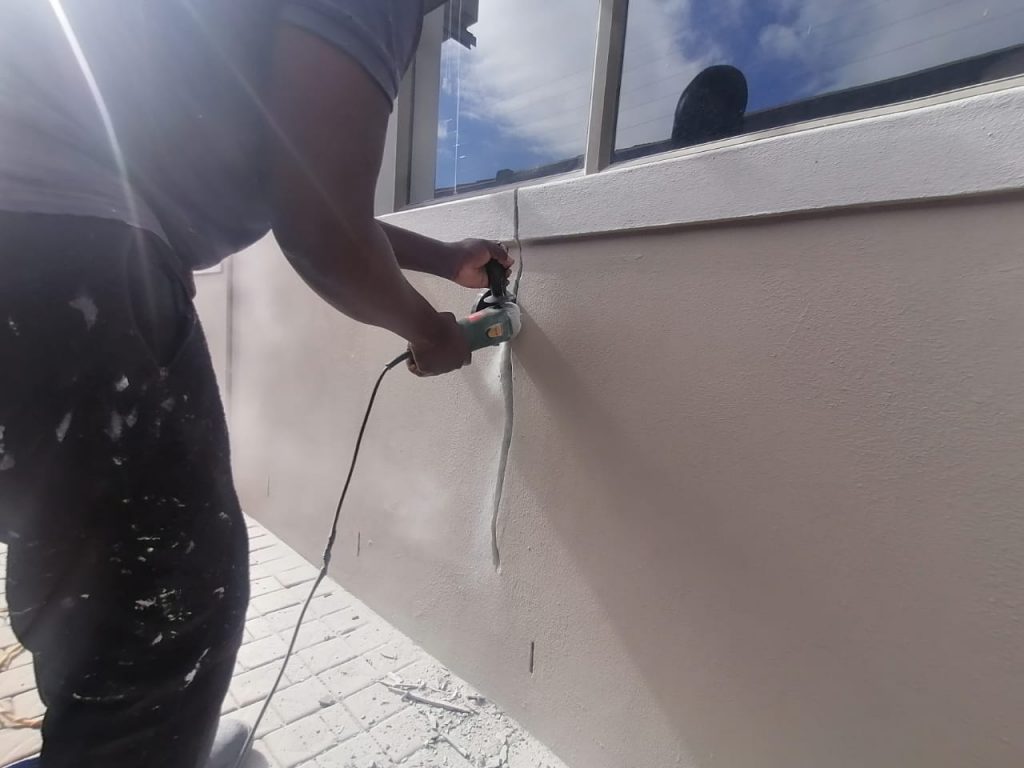
Waterproofing walls from the outside, step by step
Most damp from rain is fixed on the outside of the house. This is the order that works.
- 1Fix the cause
Clear gutters, repair flashings and fix any leaking pipes first. - 2Remove loose material
Scrape off flaking paint and hack off plaster that sounds hollow. - 3Open and fill cracks
Cut cracks open slightly, then fill them with a flexible crack filler. Bigger cracks get a fibre mesh bandage. - 4Treat mould and algae
Wash the wall with a fungicidal wash and let it dry. - 5Repair the plaster
Patch damaged areas so the surface is sound and even. - 6Prime
Use a primer that suits the surface, so the coating bonds well. - 7Apply the waterproof coating
Two coats of a good exterior waterproofing paint or elastomeric coating, at the coverage the maker gives.
Waterproofing paint: what it can and cannot do
Good waterproofing paint is flexible. It stretches over hairline cracks and stops driving rain from soaking in. Most products also let water vapour out, so the wall can breathe.
- It can stop rain getting in through the wall surface.
- It can bridge fine cracks that open and close with the weather.
- It cannot stop rising damp from the ground.
- It cannot fix a leaking pipe, gutter or roof.
- It cannot hold on loose plaster or dusty, unprepared walls.
Product quality varies a lot. The South African Paint Manufacturing Association has useful information on paint standards. Our exterior painting team uses the prep steps above before any coat goes on.
Our team can find the cause and fix it before the next rain.
Get a free quoteCall 076 272 8280Rising damp and inside walls
Rising damp needs a different fix. Most houses have a damp proof course, a plastic layer in the brickwork just above ground level. When it is missing, damaged or bridged by soil or paving, water climbs up the wall.
- Lower the ground or paving outside so it sits below the damp proof course.
- Clear plaster that runs down past the damp proof course outside, because it can bridge it.
- Where the damp proof course has failed, a damp specialist can inject a chemical barrier.
- Hack off salty plaster inside and replaster once the wall has dried.
We will tell you what we find and which fix fits. Salts left in old plaster keep pulling in moisture, so replastering is often part of the job.
Waterproofing walls at parapets, sills and roof joins
Many damp walls are really roof problems. Water gets in at the top of a parapet wall, under a window sill, or where a wall meets a flat roof.
- Parapet tops should slope and be sealed, or capped.
- Window sills need a slope away from the wall and a drip groove underneath.
- Where a wall meets a flat roof, the waterproofing must turn up the wall and be sealed.
Read our guide to roof leak repair if the damp is near the ceiling. We handle roof waterproofing and roof repairs on tiled, sheet and flat roofs.
What affects the cost of waterproofing walls
No two damp problems are the same, so the price depends on what we find. These are the main things that change the cost.
- The cause. Clearing a gutter is quick. Replacing a failed damp proof course is a bigger job.
- Wall area. One patch costs less than coating every wall of a double storey house.
- Plaster condition. Hollow or salty plaster has to be hacked off and redone before any coating.
- Number of cracks. Many cracks mean more cutting, filling and mesh.
- Height and access. Upper floors and gable walls need scaffolding or ladders set up safely.
- Coating choice. Better elastomeric coatings cost more per litre but last longer on weather walls.
Ask for a quote that lists the prep work, not only the paint. Waterproofing walls fails most often when prep is cut short.
Mistakes to avoid
- Painting over damp. The stain and the peeling come back within months.
- Sealing the inside only. This traps water in the wall and can spread it.
- Using normal paint on a weather wall. It does not flex, so cracks open again.
- Skipping crack repairs. Every open crack is a path for rain.
- Ignoring gutters. One blocked gutter can soak a wall all winter.
If the whole house needs a fresh coat, our guide to exterior house painting explains prep and paint choices.
Getting help with waterproofing in Cape Town
Our team handles waterproofing Cape Town homes need, from cracks and coatings to roofs and gutters. We work across Cape Town and the Western Cape. Get a free quote and we will look at the walls, find the cause and explain your options.
Waterproofing walls FAQs
Will waterproofing paint fix rising damp?
Should I waterproof walls on the inside or the outside?
How long does a wall take to dry after a leak?
When is the best time for waterproofing walls in Cape Town?
Why does my paint keep peeling on one wall?
Free quotes. Mon to Fri 08:00 to 17:00, Sat 08:00 to 15:00.
Get a free quoteCall 076 272 8280