Exterior house painting does more than make your home look good. The paint is the first layer that protects your walls from rain, sun, wind and salty air. This guide covers when to repaint, how to prepare, which paint to use and the mistakes that make paint fail early on Cape Town homes.
Our painting team works on homes and businesses across Cape Town. These are the things we look at before a single brush touches the wall.
Signs Your Home Needs Exterior House Painting
Walk around your house and look closely at the walls, the fascias and the window frames. These signs tell you it is time.
Chalky walls
Rub your hand on the wall. If it comes away white or coloured, the paint is breaking down.
Peeling and flaking
Paint lifting off in strips or flakes, often near the ground or under windows.
Cracks
Fine cracks in the plaster let water in behind the paint.
Faded colour
Walls that face the sun fade first and look patchy.
Mould and algae
Green or black marks on shady walls that stay damp in winter.
Bare wood and rust
Fascias, doors and gates with bare wood or rust spots.
Cape Town Weather and Exterior Paint
Cape Town is tough on paint. Winter cold fronts bring long spells of rain. The south-easter blows dust and dries paint too fast.
Homes near the coast also face salty air, which speeds up rust on steel and wears paint faster. In summer, strong sun fades colours and dries out old paint.
That is why timing matters. We plan exterior painting for dry, calm days, and we avoid painting when rain is due before the paint can dry. The South African Paint Manufacturers Association is a good place to learn more about paint quality and standards.
Preparation: The Most Important Part of Exterior House Painting
Good paint on a badly prepared wall will still fail. Most of the time on a proper paint job goes into the prep. This is the order we follow.
- 1Wash the walls
Remove dust, salt and dirt. High pressure cleaning works well on most plastered walls. - 2Treat mould
Kill mould and algae with a suitable wash and let the wall dry fully. - 3Scrape loose paint
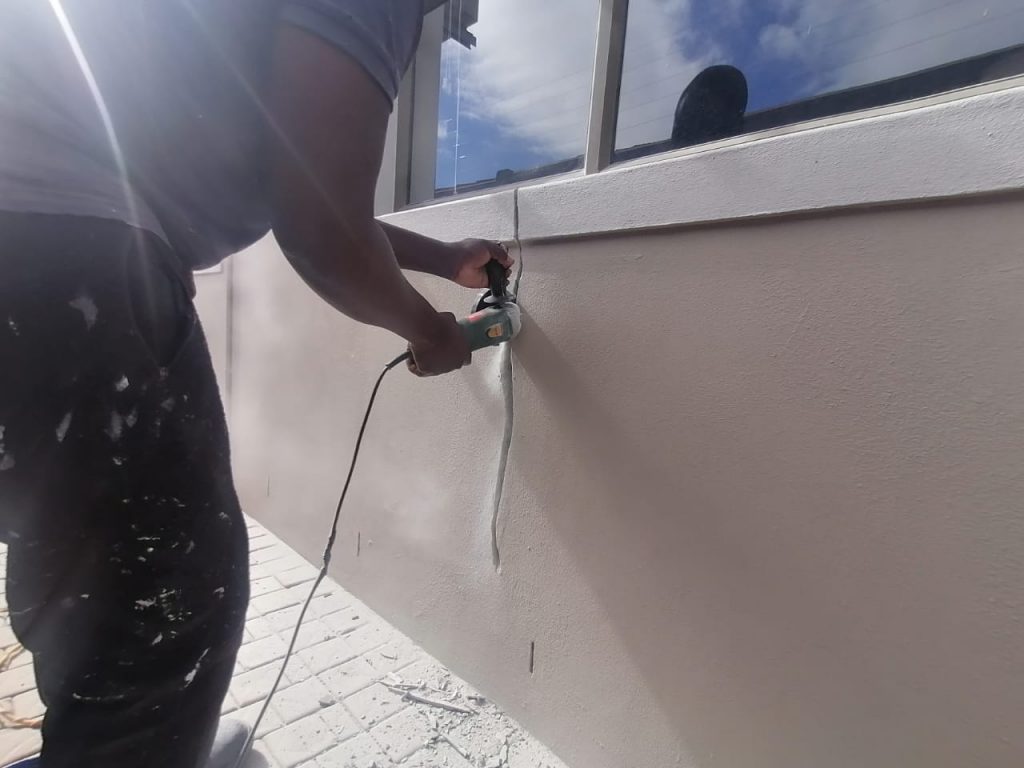
Scrape and sand all loose and flaking paint back to a firm edge. - 4Fix cracks
Open up and fill cracks with the right exterior filler so they do not show again. - 5Check for damp
Find the cause of damp patches first, such as a leaking gutter, roof or pipe. - 6Prime bare areas
Prime new plaster, bare patches, wood and steel with the right primer. - 7Cover and mask
Cover paving, windows and plants near the walls before painting starts.
We check your walls, explain the prep needed and give you a clear quote. Free quotes across Cape Town.
Get a free quoteCall 076 272 8280Choosing the Right Exterior Paint
Not every surface takes the same paint. Using the wrong product is one of the main reasons paint fails early. Here is a simple guide.
| Surface | Usually use | Good to know |
|---|---|---|
| Plastered walls | Good quality exterior acrylic | Pick a paint made for outdoor use, not an interior paint. |
| Cracked or rough walls | Elastic or textured exterior coating | Bridges fine cracks and hides an uneven finish. |
| Wood fascias and doors | Primer, then enamel or a wood finish | Wood moves with heat, so the coating must flex. |
| Steel gates and burglar bars | Rust primer, then enamel | Remove rust first, especially near the coast. |
| Roof tiles or sheets | A roof paint system | Roofs need their own products and method. |
Colour and sheen
Lighter colours fade less in the sun and keep walls a bit cooler. Very dark colours can fade and show patchiness faster on sunny walls.
Most homes look best with a low sheen or matt finish on the walls and a tougher sheen on doors, frames and trims.
How Long Exterior House Painting Takes
As a rough guide, the outside of an average single-storey house takes a few days to about two weeks. Weather, the amount of prep and the size of the house make the biggest difference.
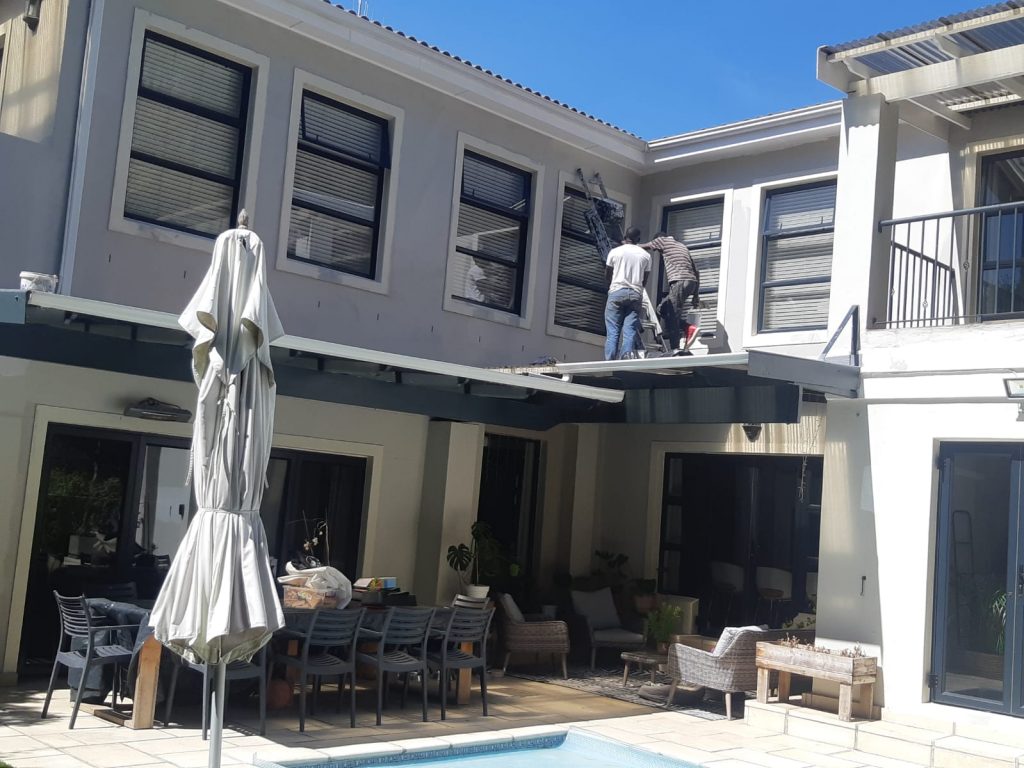
Double-storey homes need scaffolding or ladders that are set up safely, which adds time. Most walls need two top coats, with drying time in between.
Mistakes to Avoid With Exterior Paint
- Painting over dirt, salt or loose paint.
- Painting a wet wall, or just before rain.
- Painting in strong wind or in the hot midday sun.
- Using interior paint, or cheap paint, on outside walls.
- Ignoring damp. The paint will bubble again until the cause is fixed.
- Skipping the second coat to save money.
Damp around the top of a wall can come from a flat roof or parapet. Our guide to torch on waterproofing explains how that is fixed.
What Affects the Cost of Exterior House Painting
Every painting quote is based on the house in front of us. These are the main things that change the price of exterior house painting.
- The size of the house and the number of storeys.
- The condition of the walls and how much prep they need.
- How many cracks and damp patches need repair.
- The quality of the paint you choose.
- The number of colours, and how many trims, frames and gates are included.
- Access, such as tight side passages or steep ground.
Many home owners do the roof at the same time. Our roof painting uses the spray method and finishes the look of the whole house.
How to Make Exterior House Painting Last Longer
A good paint job can look fresh for years if you look after it. A few small habits protect the money you spent on exterior house painting.
- Wash the walls gently once a year, especially homes near the sea where salt builds up.
- Keep gutters and downpipes clear so rain water does not run down the walls.
- Touch up chips and small cracks before winter, so water cannot get in behind the paint.
- Fix dripping outside taps and leaking pipes on the walls quickly.
- Check steel gates and burglar bars for rust spots and treat them early.
- Look at the shady side of the house each spring for mould and clean it off quickly.
Most of these take a few minutes. They can add years before the next round of exterior house painting is needed.
DIY or Hire Painters?
Painting a small boundary wall yourself on a calm weekend is fine. A full house is a bigger job. It needs safe access at height, proper prep and the right products for each surface.
Our team offers exterior painting and interior work for homes and businesses. If you are comparing painters in Cape Town, ask each one what prep they will do, not only which paint they will use. Our full house painting service covers walls, trims, doors and gates.
We work across Cape Town and the Western Cape. Mon to Fri 08:00 to 17:00, Sat 08:00 to 15:00.
Get a free quoteCall 076 272 8280Send us a few photos of your walls and get a free quote for exterior house painting. We will tell you what prep your walls need.