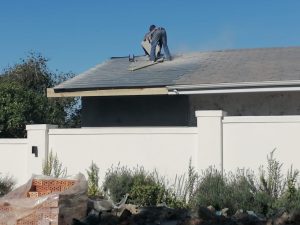
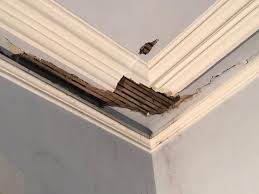
A roof leak repair is a job you want done quickly. One small drip in winter can soak your ceiling boards, ruin paint and let mould grow in the roof space. This guide shows you the signs of a leak, the most common causes in Cape Town homes, and what to do first before a roofer arrives.
Our team does roof work across Cape Town and the Western Cape. Many leaks start small and get worse because nobody noticed them early. If you know what to look for, you can save yourself a lot of money.
Signs You Need a Roof Leak Repair
Not every leak drips. Many show up as stains or smells long before you see water. Walk through your home after heavy rain and look for these signs.
Ceiling stains
Yellow or brown rings on the ceiling, often near a wall or a light fitting.
Peeling paint
Paint that bubbles or flakes on ceilings and the top of walls.
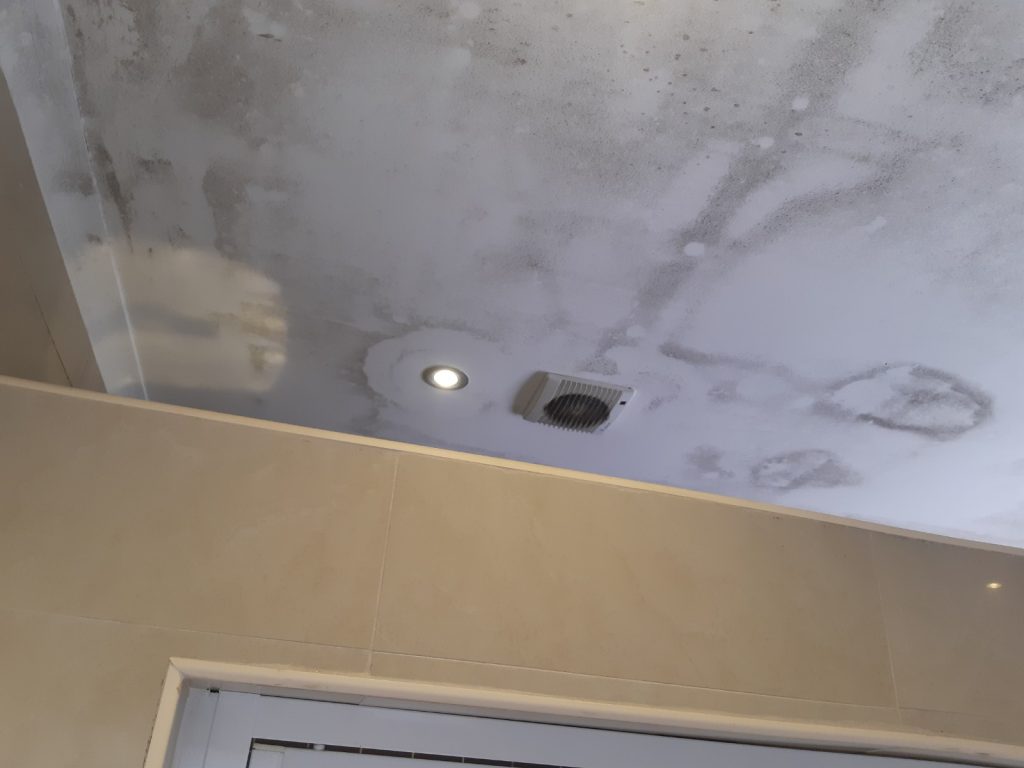
Damp smell
A musty smell in one room, or black mould in a corner.
Sagging boards
A ceiling board that bulges or sags. This means water is sitting on top of it.
Light in the roof
Daylight showing through the tiles or sheets when you look inside the roof space.
Rust and wet timber
Rusty sheets, rusty screws or dark, wet patches on the roof timbers.
Common Causes of Roof Leaks in Cape Town Homes
Cape Town is hard on roofs. Winter cold fronts bring days of rain, and summer brings strong sun and the south-easter. Homes near the sea also deal with salty air.
These are the causes we find most often when we do a roof leak repair.
Cracked, slipped or broken tiles
Strong wind can lift and shift tiles. People walking on the roof, for example to fit a dish or a solar panel, often crack them. One broken tile is enough to let water in.
Worn flashings and old sealant
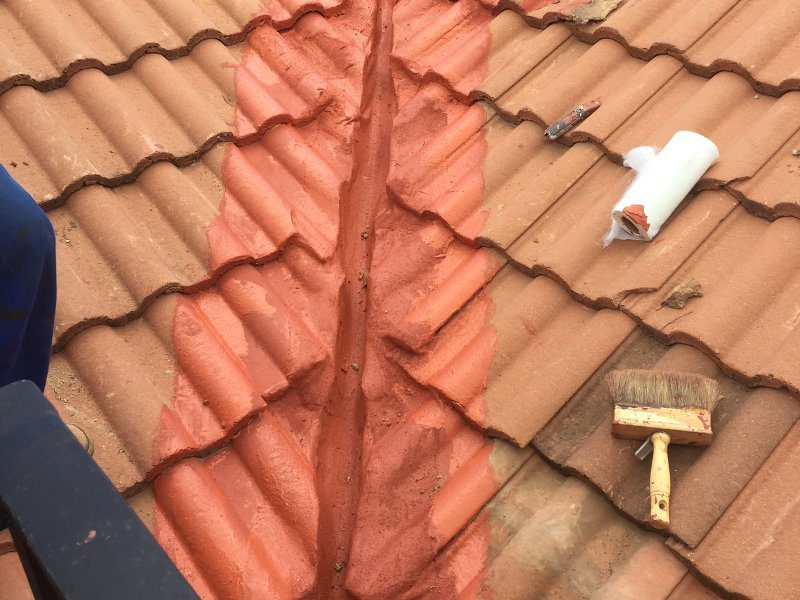
Flashings are the strips that seal the joint between the roof and a wall, a chimney or a pipe. Over time they rust, lift or the sealant cracks in the sun. This is one of the most common reasons for roof leaks.
Rusted sheets and loose screws
On corrugated and other sheet roofs, the rubber washers under the screws perish. Screws work loose in the wind. Near the coast, rust eats through laps and edges faster.
Blocked gutters and valleys
Leaves, dust and nests block gutters and valleys. In heavy rain the water backs up and runs under the tiles or sheets. It then drips straight into the roof space.
Cracked ridge mortar and failed flat roof waterproofing
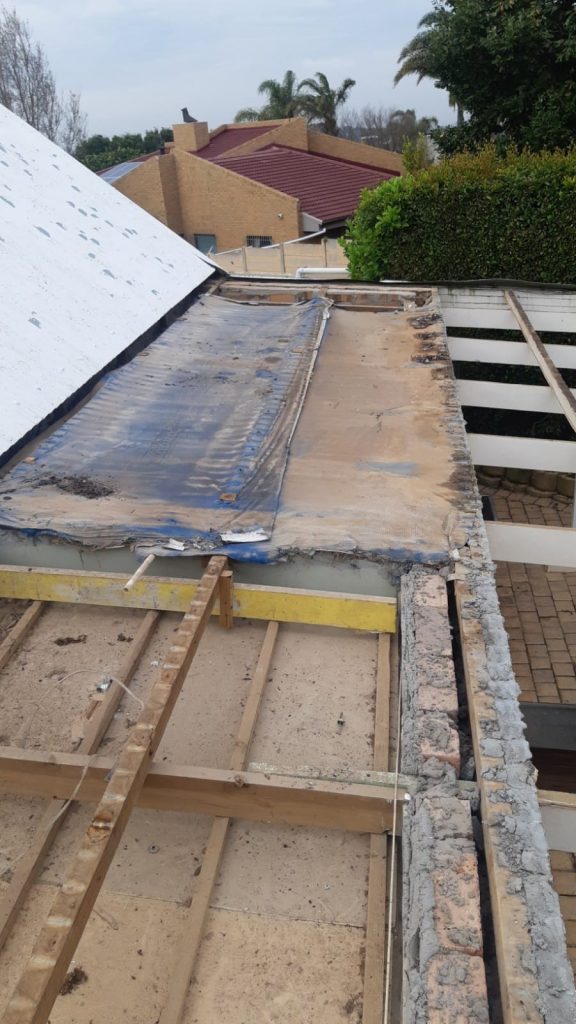
The cement that holds ridge tiles cracks with age. On flat roofs, old waterproofing splits, blisters or lifts at the edges.
What to Do First While You Wait for a Roof Leak Repair
Before the repair can happen, you need to protect your home and your family. Follow these steps in order.
- 1Stay safe around electricity
If water is near a light, plug or the DB board, switch off that circuit at the DB board. If the DB board itself is wet, do not touch it. - 2Catch the water
Put a bucket or basin under the drip. Lay old towels down to protect floors and carpets. - 3Move your things
Move furniture, beds and electronics away from the wet area. Cover what you cannot move with plastic. - 4Keep away from sagging ceilings
Do not stand under a bulging ceiling board. It can drop without warning when it is full of water. - 5Take photos
Photograph the stain, the water and any damage. Your insurer will want to see them. - 6Do not climb on a wet roof
Wet tiles and sheets are very slippery. Wait for dry, calm weather or let a roofer go up. - 7Call a roofer
Book an inspection so the leak can be found and sealed properly before the next cold front.
We inspect, find the real leak point and give you a clear quote. Free quotes across Cape Town.
Get a free quoteCall 076 272 8280Roof Leak Repair Done Right: How to Fix a Roof Leak
Many home owners ask us how to fix a roof leak themselves. The honest answer is that the hard part is finding it. Water travels along timbers and sheets, so the stain on your ceiling is often not under the hole.
A proper roof leak repair follows a clear order. First we check the roof space and then the outside of the roof. Then we repair the cause, not just the spot where the water came out.
| Roof type | Common leak points | Typical repair |
|---|---|---|
| Concrete or clay tiles | Cracked tiles, ridge mortar, valleys, flashings | Replace tiles, re-bed and point ridges, new valley or flashing |
| Harvey tile | Cracked or shifted tiles, ridges | Replace tiles, re-bed ridges, seal joints |
| Corrugated or sheet roof | Screws, laps, rust holes, flashings | New screws with washers, seal laps, replace rusted sheets |
| Flat concrete roof | Splits, blisters, edges, outlets | Patch or redo the torch-on waterproofing |
| Thatch | Thin or worn patches, the ridge | Add new thatch to worn areas, repair the ridge |
Sometimes the roof timbers are wet or rotten as well, which makes the roof leak repair bigger. Those need to be replaced before the new covering goes on. Our roof repairs cover tiled, sheet, Harvey tile and thatch roofs.
DIY Roof Leak Repair or Call a Roofer?
Some small jobs are fine to do yourself. Others are dangerous or easy to get wrong. Here is a simple guide.
- Fine to do yourself: clear gutters from a steady ladder on a dry day, check the roof space with a torch, catch water inside.
- Call a roofer: walking on tiles or sheets, steep or double-storey roofs, flashings, ridge work and anything on a flat roof.
- Avoid: smearing silicone or tar over a crack you cannot see properly. It often traps water and makes the next repair harder.
What Affects the Cost of a Roof Leak Repair
Every roof is different, so we always look before we quote. These are the things that change the price.
- How easy it is to reach the roof, and whether it is single or double storey.
- The type of roof, and whether matching tiles or sheets are still available.
- How many leak points there are.
- Whether timbers, insulation or ceiling boards are also damaged.
- Whether the whole roof needs sealing, waterproofing or painting, or only one spot.
If water has damaged the inside, we can also do the ceiling repairs once the roof is dry and sealed.
How to Prevent Roof Leaks Before Winter
The best roof leak repair is the one you never need. A few simple habits keep most roofs dry through the Cape winter.
- Book a roof check in late summer or early autumn, before the rain season starts.
- Clean gutters, downpipes and valleys at least twice a year.
- Check the roof after any big wind storm for lifted or broken tiles.
- Ask anyone who works on your roof, such as solar or dish installers, to replace any tiles they crack.
- Reseal or repaint old roofs. Good roof waterproofing adds years to a tired roof.
Before you or anyone goes up on the roof, check the forecast on the South African Weather Service website. Calm, dry days are the safest for roof work.
Call us Mon to Fri 08:00 to 17:00 or Sat 08:00 to 15:00, or send your details online.
Get a free quoteCall 076 272 8280Not sure if you need a full repair or a small fix? Send us a few photos and get a free quote. We will tell you what we see and what it needs.