Ceiling repairs after water damage are a common job in Cape Town, especially after a wet winter or a burst geyser. A brown stain, a soft patch or a sagging bulge all mean water has got into the roof space. The good news is that most damaged ceilings can be fixed well.
This guide explains what to do first, how the repair works, and what affects the cost. It will help you know what to expect before our team, or anyone else, starts work.
What to do first when the ceiling gets wet
Act quickly. The first hour can make the difference between a small patch and a whole new ceiling.
- 1Make it safe
If water is near a light or a plug, switch off that circuit at the distribution board. Keep children and pets out of the room. - 2Catch the water
Move furniture away and put buckets and towels under the drip. - 3Release a water bulge
If the ceiling is bulging, a small hole in the lowest point lets the water drain into a bucket. This can stop the whole board from collapsing. Do not stand right under it. - 4Find the source
Check for a burst geyser, a leaking pipe or a roof leak. Turn off the water at the main if it is a plumbing leak. - 5Take photos
Photograph the damage before you clean up. You may need them for an insurance claim.
Common causes of water-damaged ceilings
Burst geyser
A geyser in the roof can release a lot of water fast. Our guide on a burst geyser covers what to do.
Roof leaks
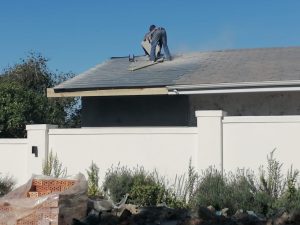
Cracked or slipped tiles, rusted sheets and failed flashings let winter rain in.
Flat roof failure
Old waterproofing on flat roofs cracks in the sun. Torch on waterproofing is a common fix.
Leaking pipes
A slow drip from a pipe or overflow in the roof space can stain a ceiling over months.
Blocked gutters
Leaves and dirt make gutters overflow, and water runs back under the roof edge.
Condensation
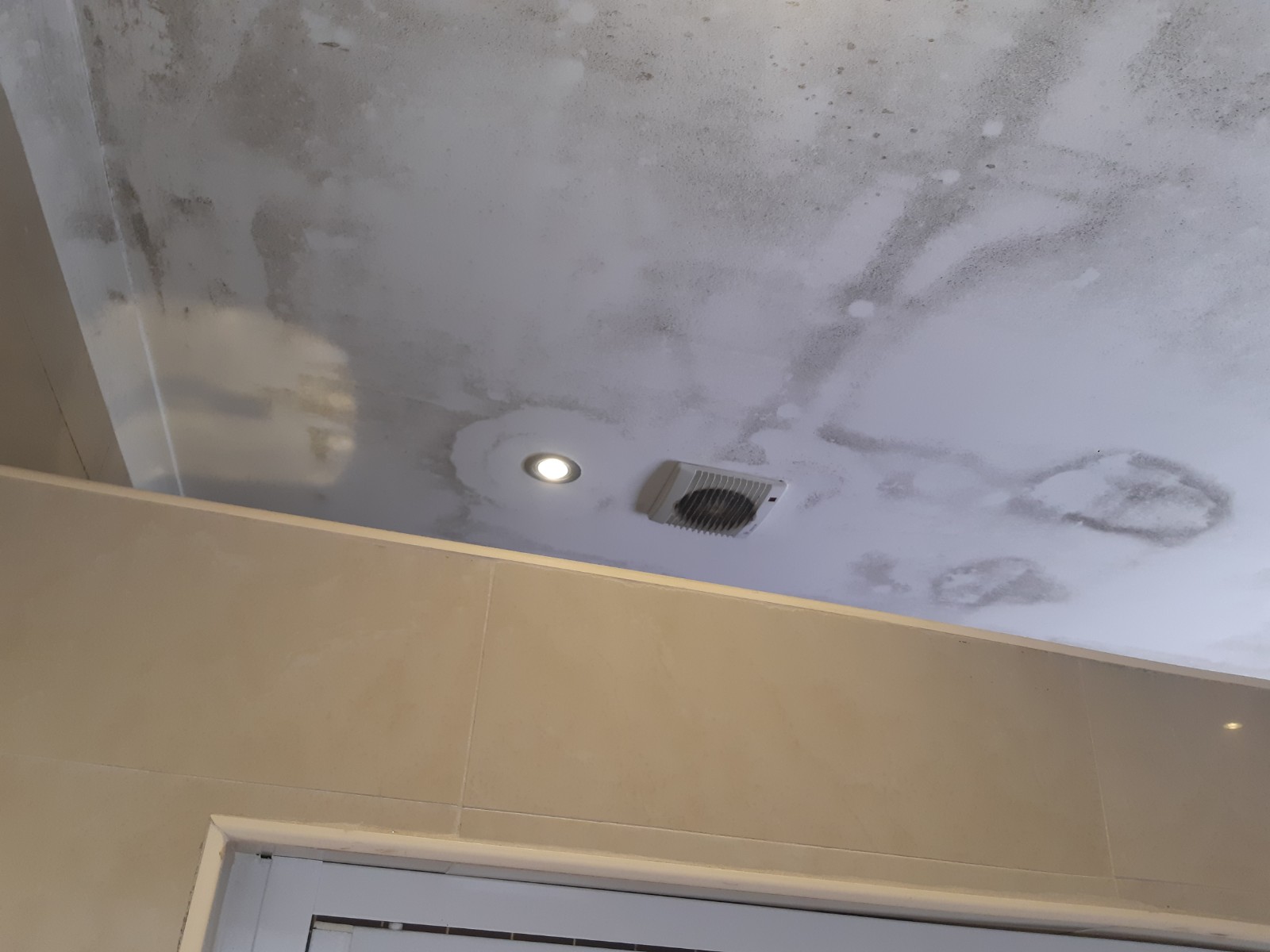
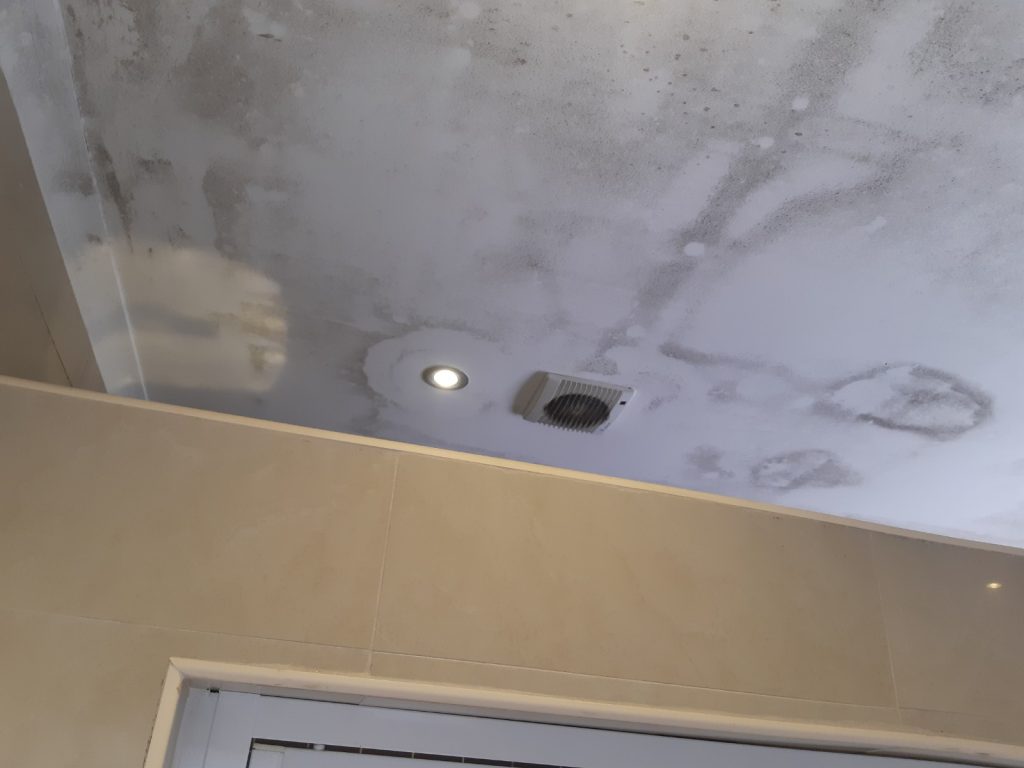
Bathrooms without an extractor fan or vent can wet the ceiling from below and cause mould.
How we assess ceiling repairs
Before quoting, a good contractor checks more than the stain you can see. The goal is to find out how far the water spread.
- Press gently on the board. Soft or crumbly board must be replaced.
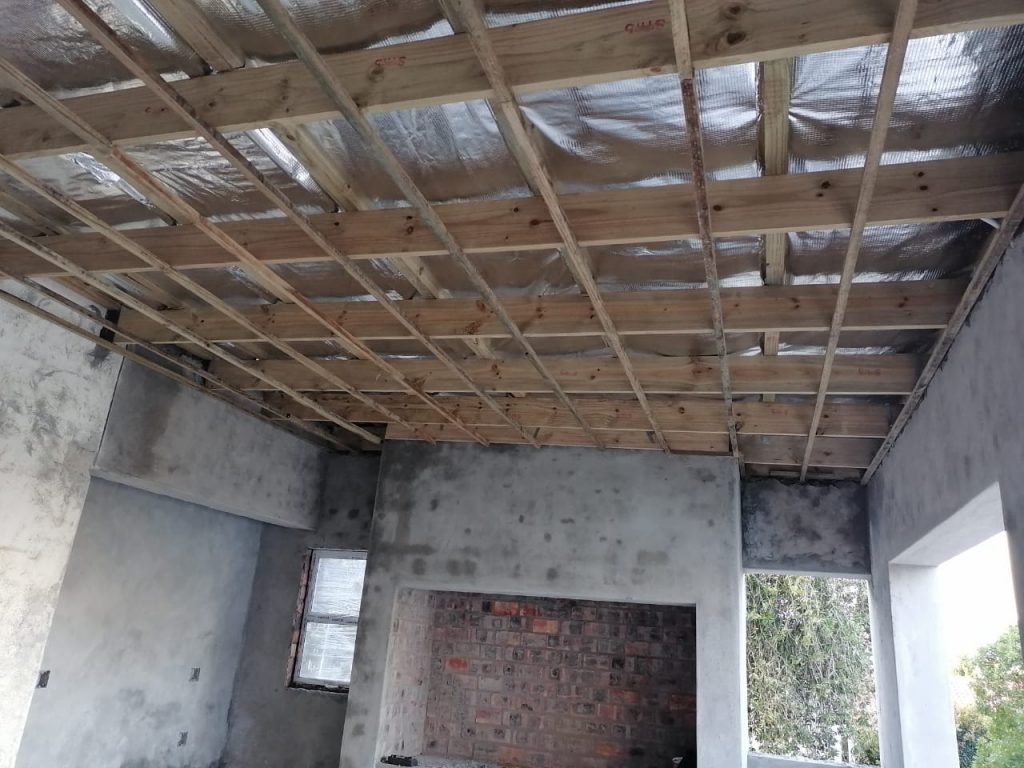
- Look into the roof space with a torch. Check the brandering (the timber battens that hold the boards).
- Check the insulation. Wet insulation loses its value and can hold moisture against the boards.
- Look for mould on the back of the boards and along the cornices.
- Check the light fittings and wiring near the damage.
If your home is older and the ceiling is a fibre cement type, do not cut or sand it yourself. Some old boards contain asbestos and need special handling.
Dealing with mould after a leak
Cape Town winters are damp, and a wet roof space can grow mould within days. Black spots on the ceiling or a musty smell are the usual signs. Surface mould on firm board can be cleaned and treated. Mould on soft or soaked board means the board must come out. Open windows and keep air moving while the room dries.
Patch or replace? Ceiling repairs options
| Damage | Usual fix |
|---|---|
| Light stain, board still firm | Dry out, stain-blocking primer, repaint |
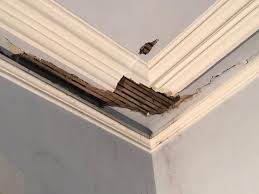
| Soft patch in one area | Cut out the damaged section, fit a new piece of board, tape and skim the joints |
| Sagging or collapsed boards | Replace the boards, check and fix the brandering |
| Damage across most of the room | Full new ceiling installation, new cornices, paint |
| Rotten brandering or mould | Replace timbers, treat the area, then new boards |
We do ceiling repairs, roof repairs and waterproofing across Cape Town. Tell us what happened and we will come and look.
Get a free quoteCall 076 272 8280The ceiling repairs process, step by step
- 1Stop the leak
The roof, geyser or pipe is repaired first, so the new ceiling stays dry. - 2Dry out
The roof space and any wet timber are left to dry. Wet insulation is removed. - 3Remove damaged board
Damaged ceiling boards and cornices are cut out and taken away. - 4Fix the frame
Loose or rotten brandering is replaced so the new boards sit flat. - 5Fit new ceiling boards
New boards are screwed to the brandering, then the joints are taped and skimmed. - 6Cornices and paint
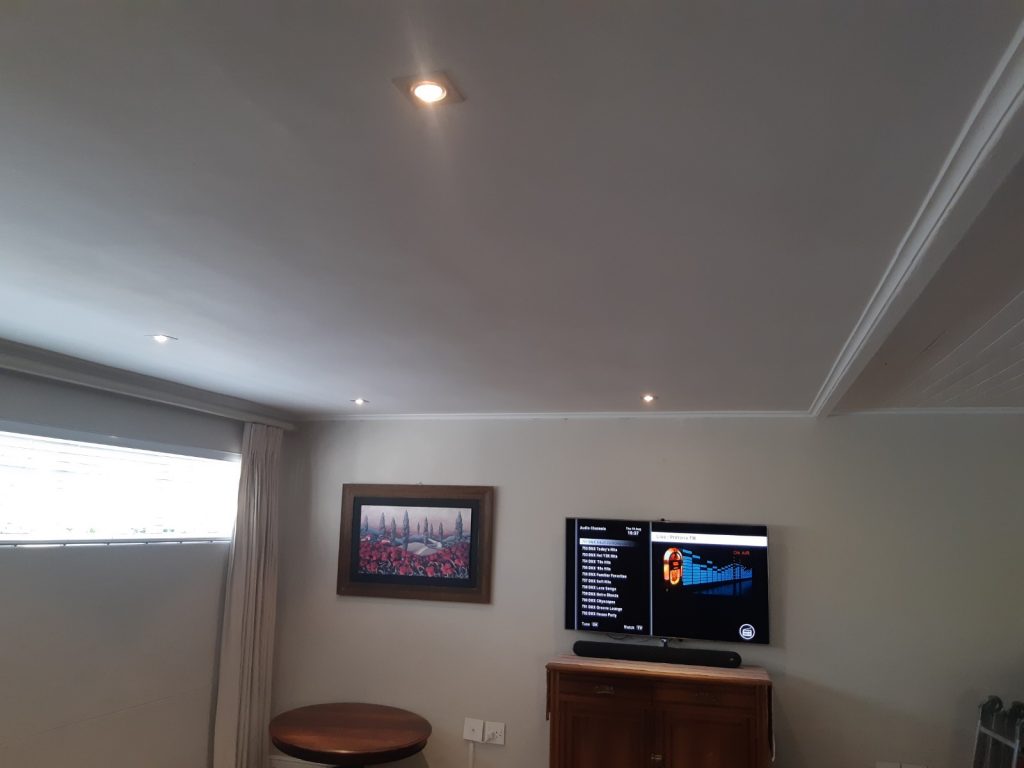
New cornices are fitted, the ceiling is primed with a stain blocker and painted to match.
Once the ceiling is done, the walls may need a refresh too. Our interior painting team can match the colour so the room looks even.
What affects the cost of ceiling repairs
- The size of the damaged area and whether the whole room needs new boards.
- The type of ceiling. Gypsum board, PVC and pine ceilings all differ in cost.
- The state of the brandering and insulation.
- Cornices, downlights and fittings that need to come off and go back.
- Access to the roof space and the height of the room.
- The repair to the roof or plumbing that caused the damage.
As a rough guide only, a small patch repair in Cape Town often costs around R1,500 to R4,000. A full new ceiling in a standard bedroom is often around R5,000 to R12,000. Prices vary a lot, so always get a quote.
How to avoid another water-damaged ceiling
- Book roof repairs for cracked tiles and rusted sheets before winter.
- Clean gutters at the end of autumn, before the main rains.
- Check your geyser drip tray and overflow pipe every few months.
- Fit an extractor fan in bathrooms that steam up.
- Look into the roof space after the first big storm of the season.
- Keep an eye on storm warnings from the South African Weather Service and check the roof after strong wind.
Ceiling repairs: common questions
Can a water stain on the ceiling just be painted over?
How long does a wet ceiling take to dry?
Is a sagging ceiling dangerous?
Should I claim from insurance for ceiling repairs?
Do you replace the whole ceiling or just the damaged part?
We work across Cape Town and the Western Cape, Monday to Saturday. Call us or send photos for a free quote.
Get a free quoteCall 076 272 8280A wet ceiling looks bad, but it is usually a fixable problem. Our ceiling repairs service fixes the cause and the damage together. Get a free quote and we will help you get your room back to normal.